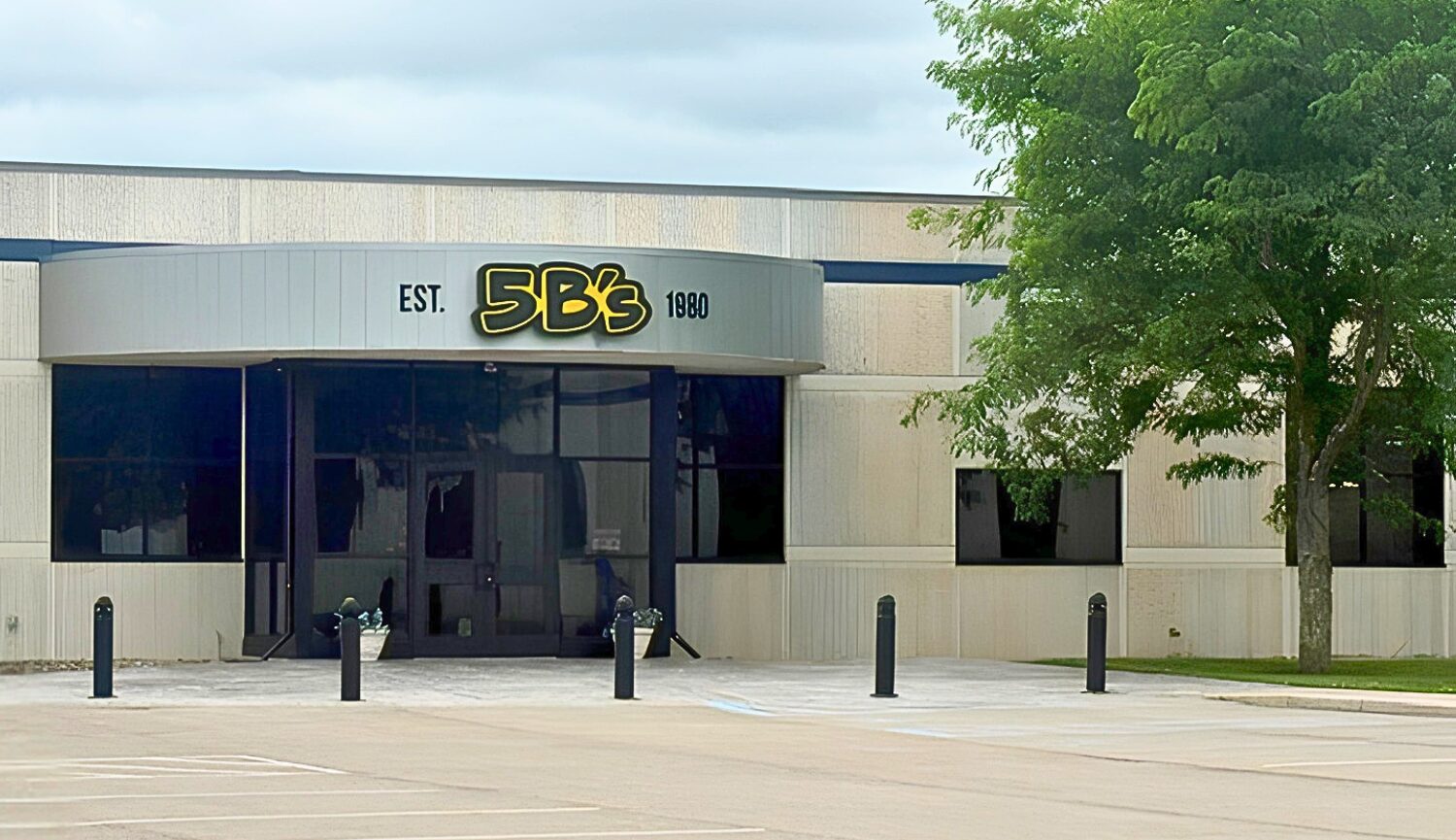
Founded in 1980 and based in Ohio, the United States, 5B’s is one of America’s leading apparel decorators. Since its founding, the company has continued to grow by adapting to changes in the market while relying on Tajima embroidery machines throughout its journey.
“If it helps solve our customers’ problems, we’ll invest in it.”
That philosophy has remained unchanged since day one.
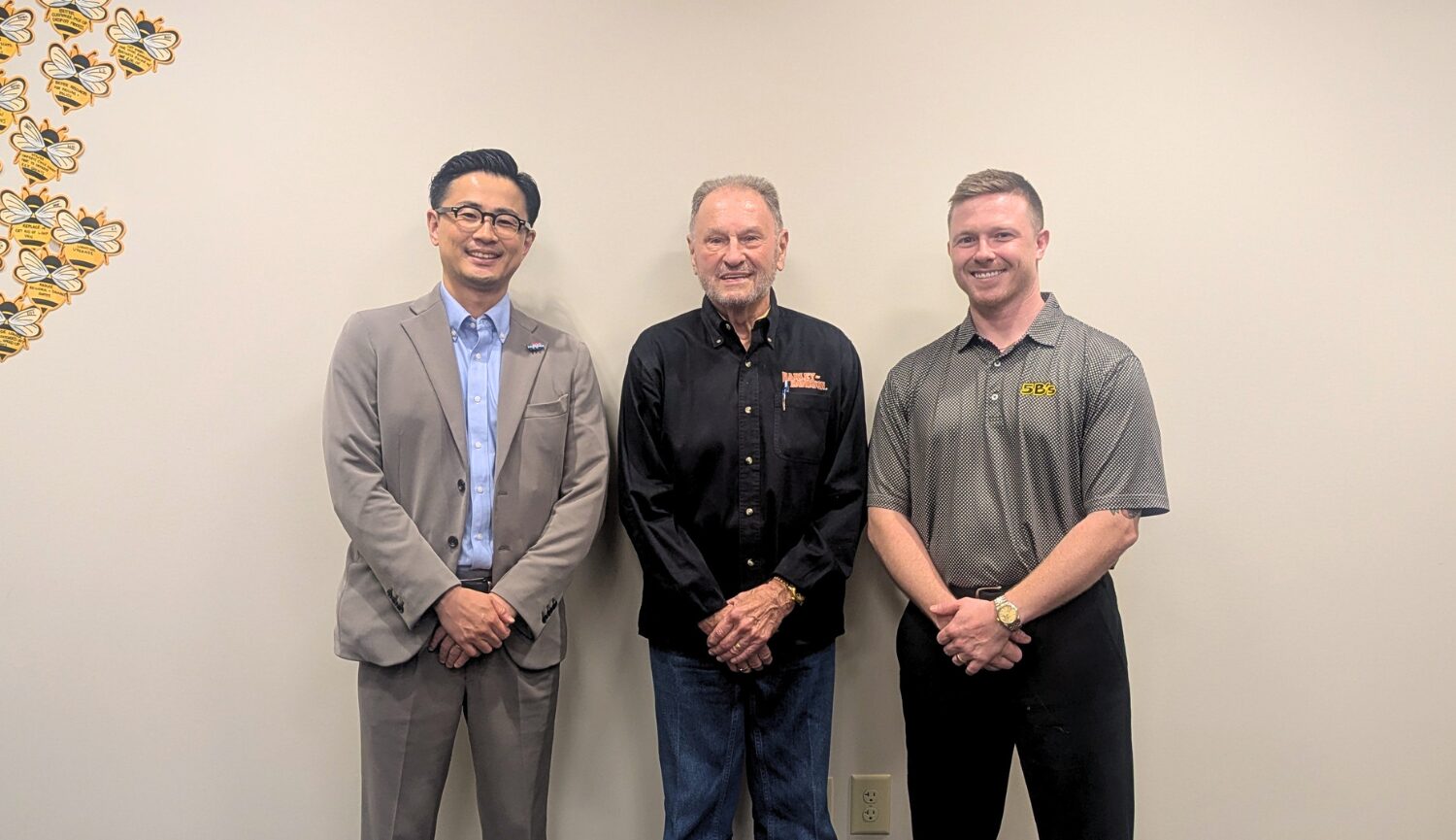
In this interview, founder Leland Biles shares why 5B’s has continued to choose Tajima embroidery machines for more than four decades and explains the company’s approach to investing in new technology.

"We Don't Buy Machines. We Invest in Tajima Technology." — Why 5B's Has Continued to Choose Tajima for More Than 40 Years
Leland Biles, Founder, 5B’s
5B’s Inc.
Founded in 1980 and headquartered in Zanesville, Ohio, the United States, 5B’s is an apparel decorator offering a wide range of decoration services, including embroidery, screen printing, patches, and DTF transfers.
Since its founding, the company has expanded its business with a focus on solving its customers’ problems. Today, 5B’s operates a 225,000-square-foot (approximately 21,000-square-meter) production facility and has more than 400 embroidery heads.
With an emphasis on quality, reliability, and partnership, 5B’s provides high-quality decorated products for apparel brands and corporate customers.
How did 5B’s first begin working with Tajima Embroidery Machines?
We started the business in 1980 in the basement of our home. After the company I had previously worked for downsized due to imports and I was let go, my wife and I decided to start a sewing business. My wife was the sewer and I was the salesman.
Not long after we started the business, we attended a trade show in Chicago, where I saw an electronic embroidery machine for the first time. At the time, the ability to embroider simply by typing letters on a keyboard was groundbreaking. I still remember how excited I was by its potential.
We later purchased a six-head, single-needle machine and entered the embroidery business in earnest. However, because it was a single-needle machine, every color change required us to cut the thread and rethread the needle, making production much more labor-intensive.
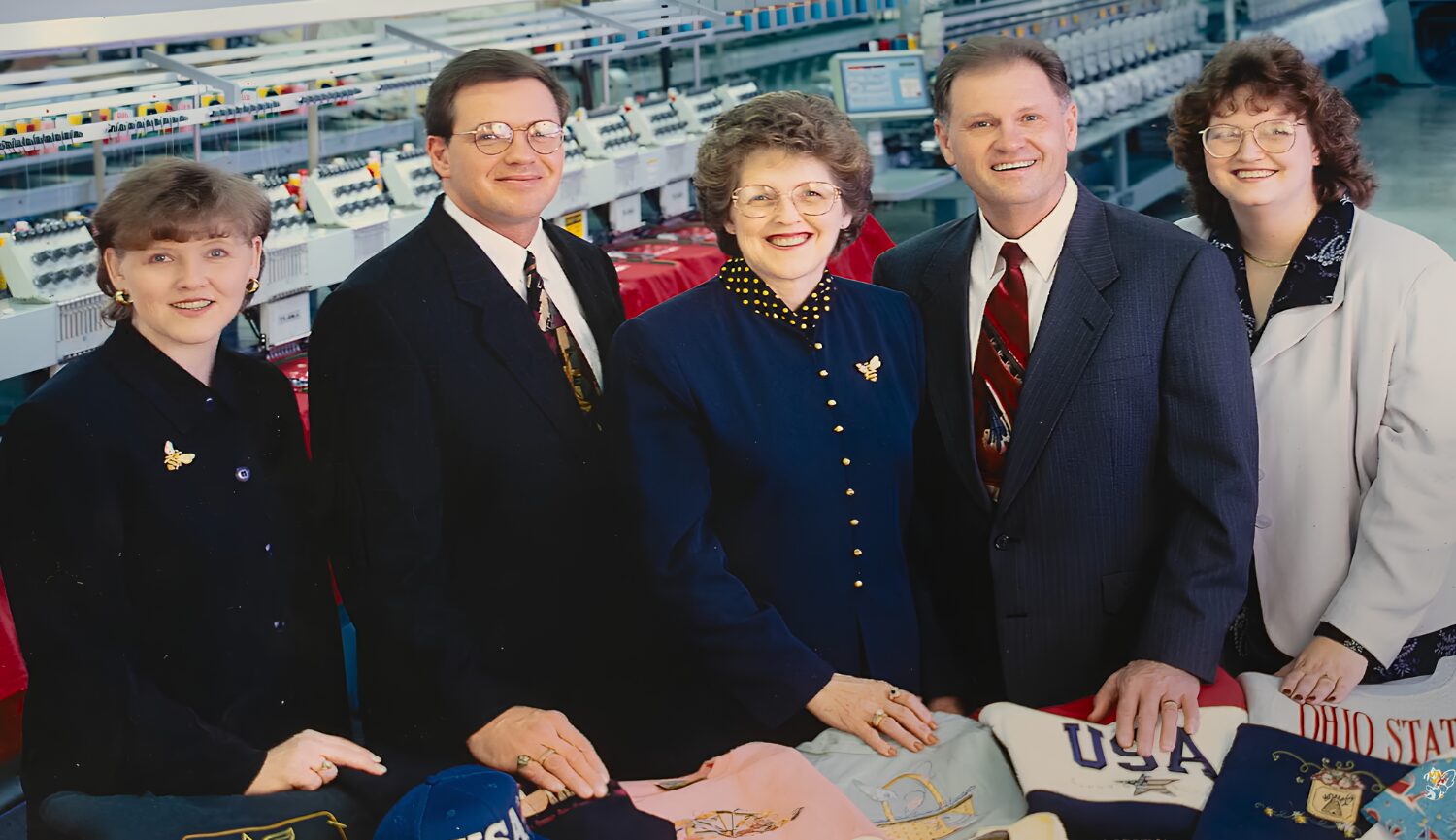
The turning point came when we first put a Tajima multi-head, multi-needle embroidery machine—installed at a company we had acquired—into production.
“It was unbelievable. The difference was beyond words.”
Unlike the single-needle machines we had been using, the Tajima machine could automatically switch between multiple thread colors, enabling continuous production. The difference in productivity was remarkable. Our existing machines simply couldn’t keep up with what the Tajima could produce.
That experience led us to purchase our first Tajima chenille embroidery machine. Looking back, I believe that was the beginning of a partnership with Tajima that has now lasted for more than 40 years.
Can you tell us about the history of cap embroidery and the growing demand for quality?
Cap embroidery has long been one of our core strengths. When we first started, only flatbed embroidery machines were available, so embroidering directly onto a finished cap—as we do today—wasn’t possible. Instead, cap manufacturers would send us the front panels, which we embroidered on flatbed machines before returning them to be assembled into finished caps.
That workflow changed dramatically with the introduction of Tajima’s Cap Frame. By making it possible to embroider directly onto finished caps, it significantly improved productivity and helped make finished-cap embroidery the industry standard.
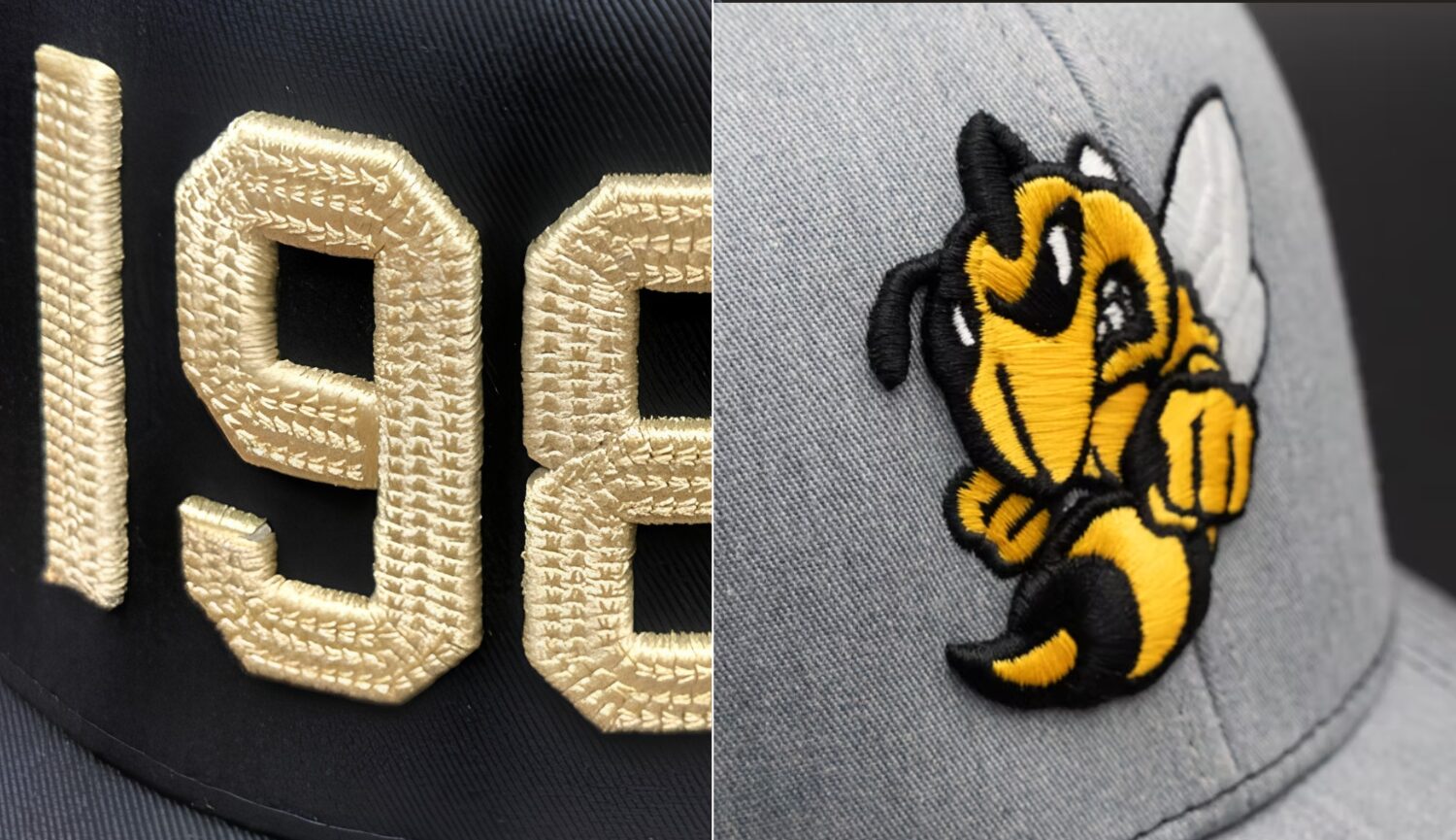
At the same time, caps themselves have continued to evolve. Today, 3D foam embroidery has become commonplace, and cap materials and construction are far more complex than they used to be.
Caps today are much more complicated than they were years ago. Customer expectations have also continued to rise. It’s no longer enough to simply embroider a design. Customers expect exceptional consistency, precise reproduction, and stable quality. To meet those expectations, we believe it’s essential to keep adopting new technologies.
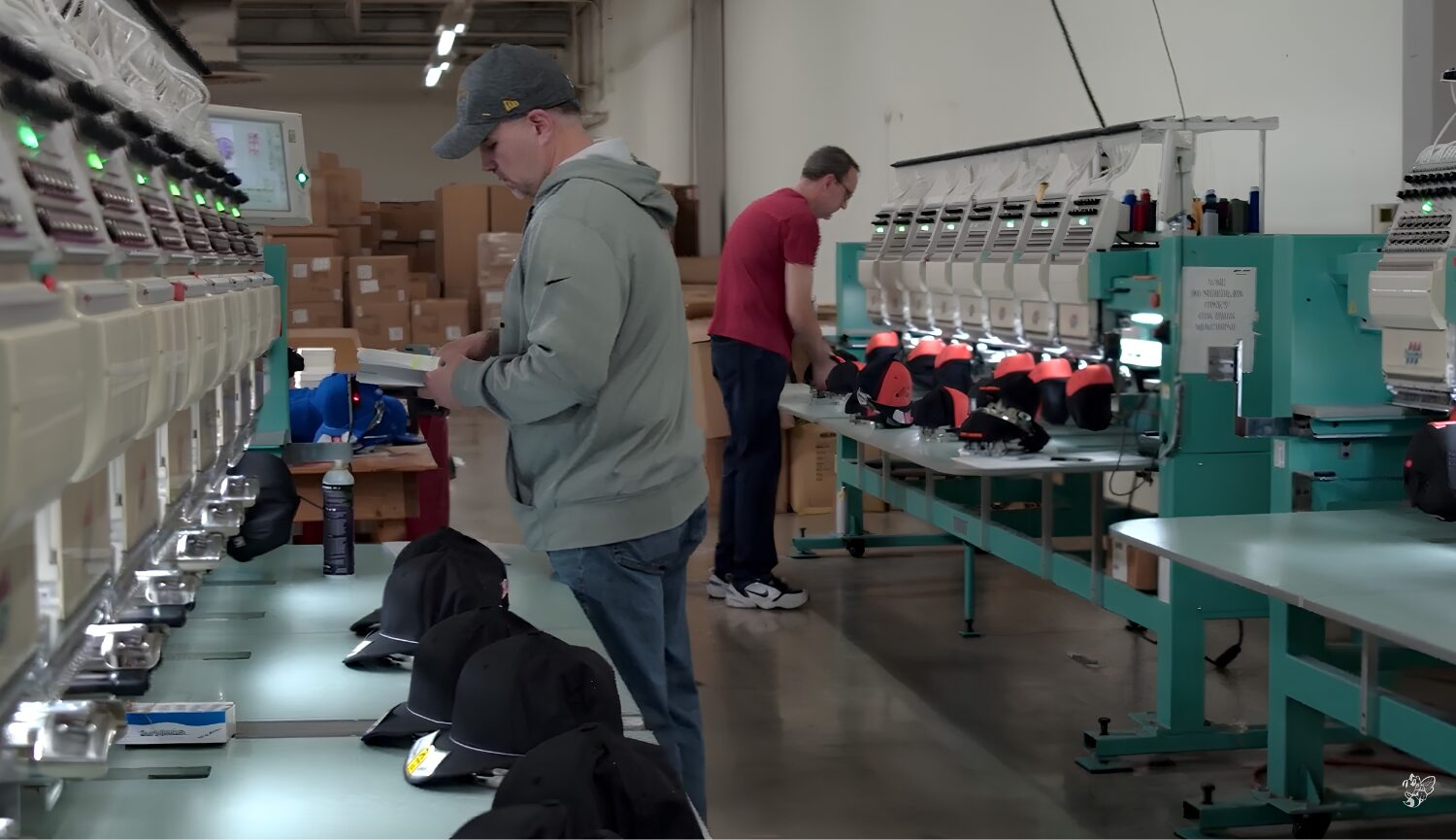

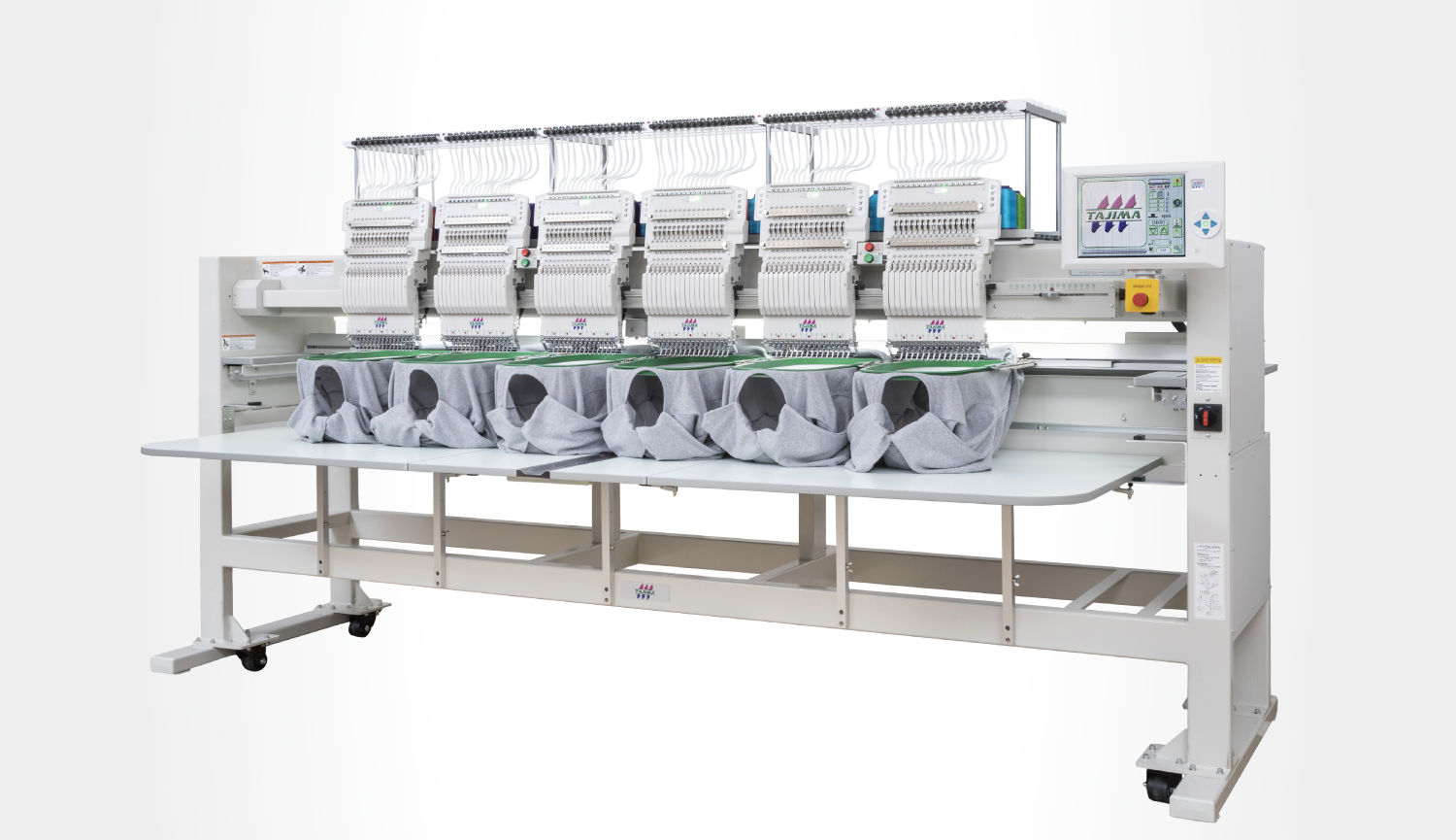
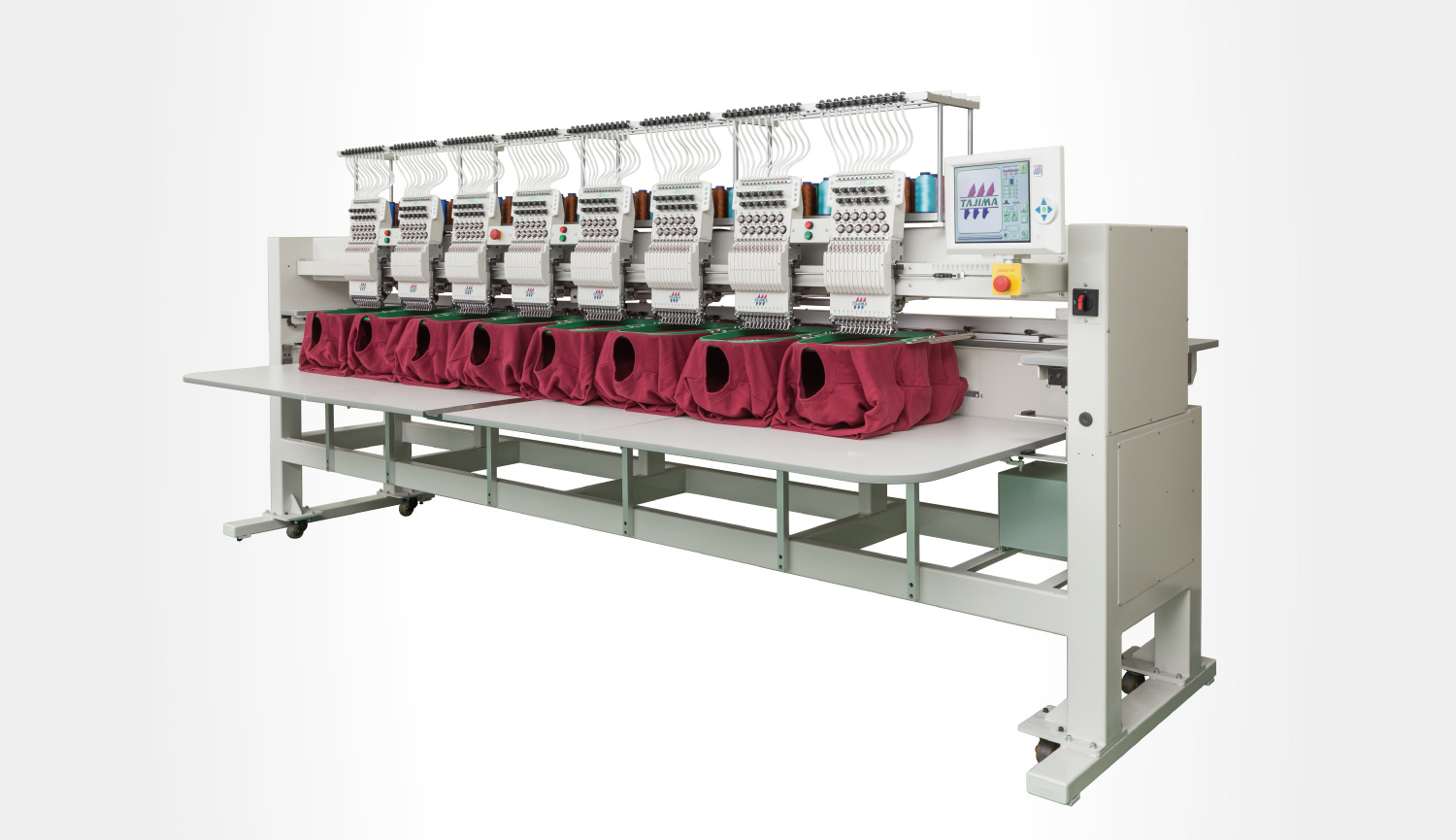
You introduced the TMEZ Series in 2022. What changes have you seen since then?
Whenever we introduce new equipment, we put it through extensive testing on our production floor before making any decisions. When we brought in our first TMEZ Series machine, I told the team, “Just run it. Throw as many different jobs at it as you can and see what it can do.”
We evaluated it across a wide variety of real-world jobs. The results spoke for themselves. We concluded that the TMEZ Series delivered real value, and today we’ve expanded our fleet to ten machines.
One of the biggest improvements we’ve seen is in 3D foam embroidery. In the past, operators had to manually adjust the Presser Foot height according to the thickness of the foam.
With the TMEZ Series, however, automatic Upper Thread tension control automatically handles those adjustments. Operators no longer need to readjust thread tension or change the Presser Foot settings for every job.
As a result, operator workload has been significantly reduced while both embroidery quality and production consistency have improved.
We never evaluate equipment based solely on catalog specifications.
・Will it help our customers?
・Can it shorten delivery times?
・Can it produce better quality?
Those are the questions we ask whenever we evaluate new technology.
What matters most is whether it creates real value on the production floor. For us, the most important criterion for any investment is whether the technology solves real production challenges and enables us to deliver greater value to our customers.
“We’re not buying machines. We’re investing in Tajima technology.”
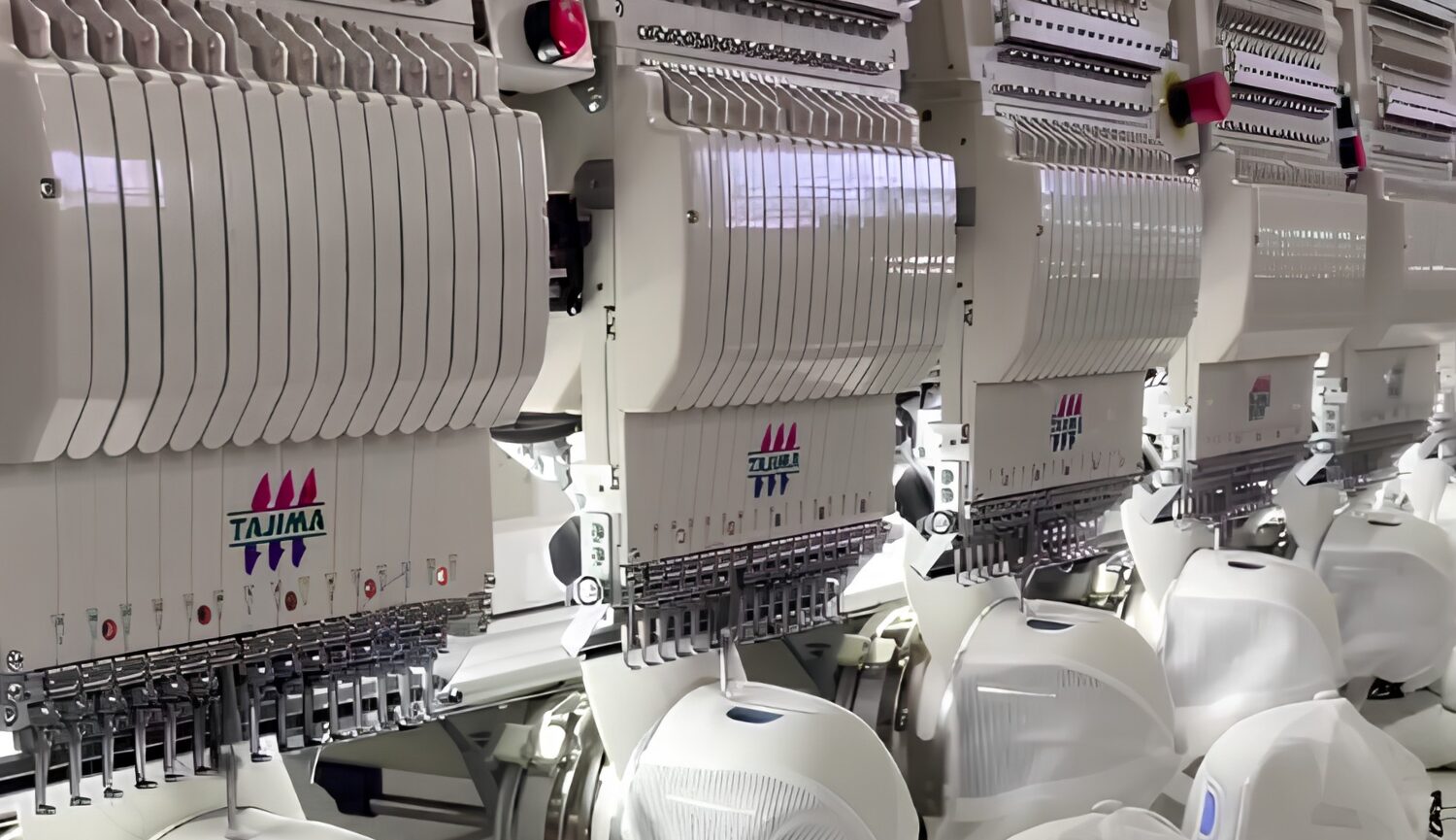
Can you tell us about your relationship with our U.S. distributor, Hirsch Solutions?
To us, Hirsch Solutions is much more than a distributor. Over the years, they have been a trusted partner—not only in helping us invest in new equipment, but also in working alongside us to solve challenges on our production floor.
Whenever an issue arose with a machine, they came to our facility, worked with us to identify the root cause, and helped us find solutions. Those experiences, built up over many years, are what have created the strong relationship of trust we have today.
Our relationship goes far beyond that of a distributor and a customer. By understanding each other’s business and working toward the same goal of producing better products, we’ve built a partnership that has lasted for decades.
What do you expect from your partnership with Tajima going forward?
“If it helps solve our customers’ problems, we’ll invest in it.”
The market will continue to evolve, and so will our customers’ needs. That’s why we’ll continue looking for technologies that solve real challenges on the production floor.